Barron River Redclaw Crayfish
Barron River Redclaw produces Australian redclaw crayfish (Cherax quadricarinatus) in inland earth-formed ponds at Biboohra in Queensland. The company’s seafood farming operation has met the Sustainable Australian Seafood Assessment Criteria for Farmed Seafood Products.
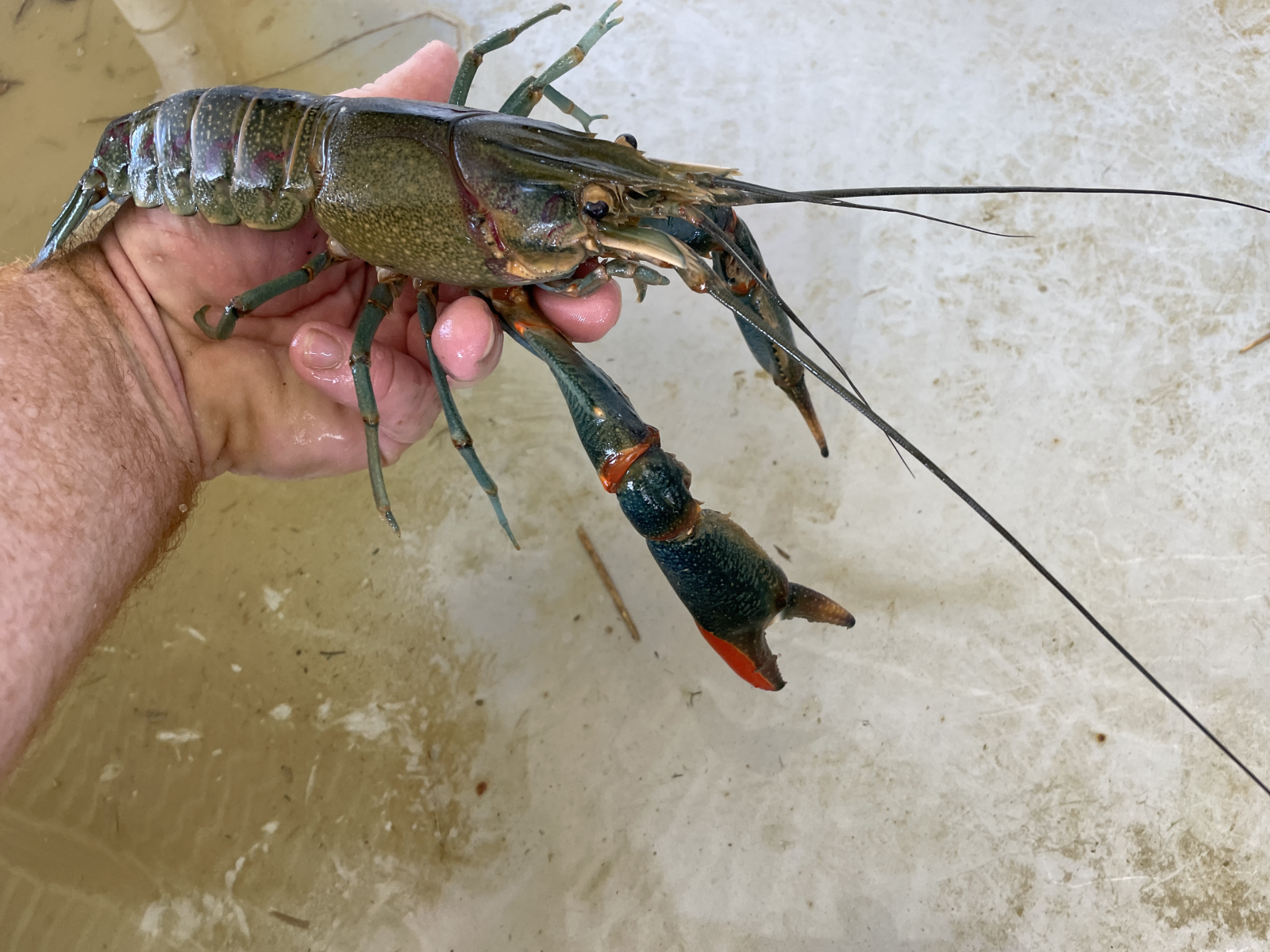
The Australian redclaw crayfish is a freshwater species native to tropical Queensland, the Northern Territory and south-east Papua New Guinea. It feeds on plants, small invertebrates and animal decay, and can grow up to 25 centimetres in length and 600 grams in weight.
The crayfish can live in various habitats including still ponds, small creeks, isolated rock pools and fast-flowing rivers, and can tolerate a broad temperature range and low levels of dissolved oxygen. It is a non-burrowing crayfish, preferring natural shelter provided by logs, rocks, vegetation and crevices. This is a major reason for them being farmed in more than 60 countries.
Overall Assessment summary
| Criterion 1 Disease and parasite risk | There is a low risk of harmful effects to native species through the spreading of disease or parasites. |
| Criterion 2 Siting and cumulative impacts | Operations do not adversely impact sensitive habitats or create cumulative impacts to the regional environment |
| Criterion 3 Wildlife interactions | There is a low risk of adverse effects in wild species populations or ecosystems from the farmed species interacting with the environment |
| Criterion 4 Sustainability of wild-sourced stock and food sources | Wild stocks of the farmed species are not stressed, and the use of feed does not result in the unsustainable harvesting of other species. |
Assessment summary by sub-criteria
| Criterion 1: Disease and parasite risk | |
|---|---|
| Risk of spreading disease and parasites to native species | There are no previous instances of disease at this farm. Redclaw are grown from high-quality sterilised hatchery stock. The crayfish are monitored for health and there are effective controls in place to reduce mixing with native species. |
| Input and use of chemicals | Chemicals and antibiotics are not used in the production of redclaw by this farming operation. “We don’t ever inject or inoculate our redclaw. We are a spy free fish organic farm and don’t use any chemicals, herbicides, biocides, medicines or any other chemical nasties.” |
| Management effectiveness | This farm follows existing National Biosecurity Plan Guidelines developed for finfish. A site-specific biosecurity plan for redclaw crayfish is planned to be developed in the future. Publicly available evidence regarding regulatory compliance from the management agency is unfortunately lacking. |
| Criterion 2: Siting and cumulative impacts | |
| Direct impact of infrastructure on habitats | The land and vegetation on this property are not highly susceptible to degradation or listed as a threatened ecological community. Although the land was cleared for development in the 1980s, native vegetation is currently being restored since the property changed ownership in 2022. |
| Near-field impacts of water and sediment pollution | The clay earth-walled ponds are not connected to local waterways and are impervious to groundwater leakage. The farm operates as a recirculating water system and biological wastes produced in the ponds are captured and used for agriculture. |
| Regional impacts | This self-contained inland aquaculture operation does not discharge or impact any waterways or groundwater. |
| Management Effectiveness | This farm follows the environmental regulations required under their development application permit. However, there are no regular independent inspections to assess effectiveness or compliance. |
| Criterion 3: Wildlife interactions | |
| Insignificant risk of wildlife interaction | There is no evidence to suggest that the operation’s risk to wildlife is insignificant (continue to the following sub criterion). |
| Behavioural effects | There are no significant behavioural effects on wildlife as the redclaw ponds are land-based and fences and nets are designed to exclude other wildlife. |
| Entanglements and incidental mortality | Wildlife mitigation practices, such as fencing and netting, have been refined over the years and do not result in entanglements or the death of native wildlife such as birds and water rats. |
| Escapes, translocations and genetic impacts | Redclaw can be an invasive species outside of their native range. However, they are regarded as being native or have long-established populations across the local watersheds of the upper Barron River. Escapes are not regarded as a problem, except for uncontrollable impacts such as 1:100 years flooding events. |
| Management effectiveness | This operation meets all regulations and exhibits high-quality, effective and proactive management of wildlife interactions. |
| Criterion 4: Sustainability of wild-sourced stock and food sources | |
| Ongoing reliance on wild stocks for broodstock, juveniles or feed | There is no ongoing reliance on wild populations. Juveniles are sourced from a closed-life-cycle hatchery that does not rely directly on wild populations. |
| Wild stocks are sustainable | The cultured redclaw originated from a selective breeding program using distinct genetic strains throughout the species natural range and are no longer harvested from wild stocks. |
| Food is from sustainable sources | A sustainable plant-based pellet feed was developed from university research and is now commercially produced in the region. Pellet feed is supplemented with organically grown fruit and vegetables. |