Chris Bolton Fishing common coral trout
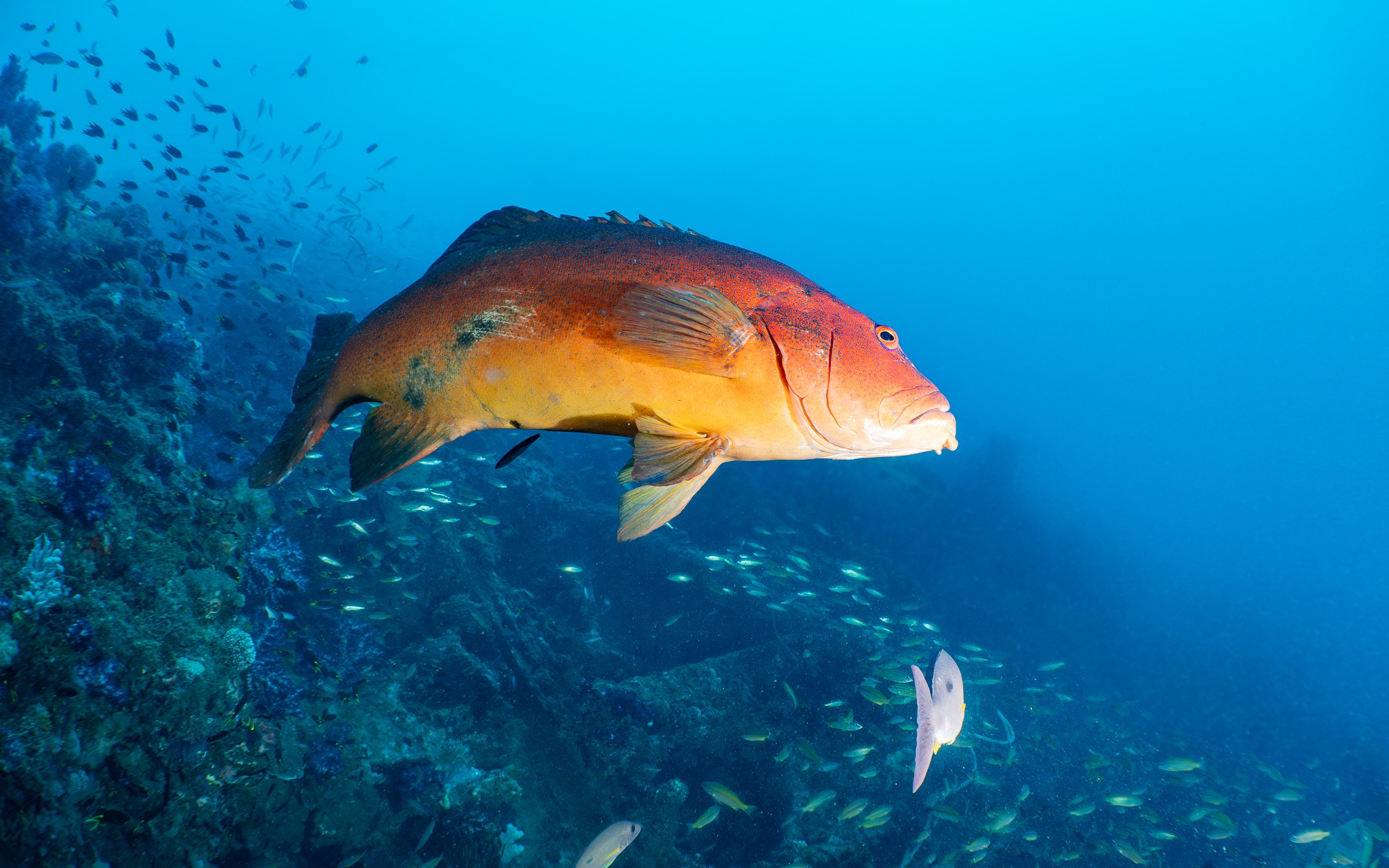
Chris Bolton uses single-hook handlines to harvest common coral trout (Plectropomus leopardus) in the Great Barrier Reef Marine Park, Queensland. His fishing operation has met our Sustainable Australian Seafood Assessment Criteria for wild-catch seafood products.
Common coral trout have a wide-ranging distribution around the northern half of Australia and elsewhere in the tropical Western Pacific. They are found in water depths of three to 100 metres and mainly around coral reef habitat where they may stay on the same individual reefs after settlement as larvae. Nearer the surface they are greenish in colour, but in deeper water they are red.
Below are the overall and sub-criteria assessment summaries for Chris Bolton Fishing Common Coral Trout.
Overall Assessment summary
| Criterion 1 Status of wild stocks: Target and by-product species | Wild populations are at a healthy level and are managed to support the current rates of fishing over the long term. |
| Criterion 2 Bycatch | Fish are captured using techniques that minimise the catch of other species, and released fish have high rates of survival. |
| Criterion 3 Impacts of fishing on habitats and ecosystems | Fishing causes minimal impact on the ecology of other ocean species and the health of their habitats. |
Assessment summary by sub-criteria
| Criterion 1: Status of wild stocks: Target and by-product species | |
|---|---|
| Management classification | The population is at a level of ‘maximum economic yield’. That is, it maximises net profit at lower levels of catch and effort. It is therefore regarded as underutilised when compared with the ‘maximum sustainable yield’, which is the largest catch of fish that can be achieved without the fish population declining. |
| Current population relative to unfished level | At the start of 2022 the target species population size was estimated at 60% of unfished levels. |
| Extent of overfishing | There is no indication that overfishing is occurring, and the current level of fishing mortality is unlikely to cause significant stock declines. |
| Long-term trends | Catches have been stable for the past 10 years, while catch rates over the past 5 years have been trending upwards. This mean that the producer is spending less time for the same catch. |
| Biological parameters | Comparisons of fished areas to protected areas on the Great Barrier Reef indicate fishing has impacted the size and age of female fish in the population, although the geographic range of this species and sex-ratio are not significantly impacted by fishing. |
| Management effectiveness | The fishery is effectively managed by the Department of Primary Industries, Queensland. Stock abundance is managed to maintain 60% of unfished levels and it appears ecosystem integrity is intact. |
| Criterion 2: Bycatch | |
| Is there bycatch? | Yes |
| Population impacts of bycatch | Although there is a lack of published data on bycatch rates, there is high survivorship of discards. It appears there are only low-level impacts on the population levels of any species in the bycatch. |
| Ecosystem impacts of bycatch discards | There does not appear to be any significant ecosystem impacts from bycatch discards or bait fishing. The majority of bycatch consists of undersized target and by-product species which are released alive. However, given that there is very little data on bycatch composition and rates of discarding for non-target species, this potential impact cannot be assessed adequately and remains unknown. |
| Management effectiveness | There are some historical data on bycatch discards rates and post-release survival which have been used to inform stock assessments and the catch quota. There is monitoring of threatened species and all retained catch to species level through an electronic logbook, but overall, there is room for improved monitoring and management of bycatch. |
| Criterion 3: Impacts of fishing on habitats and ecosystems | |
| Trophic impacts of species catch (target and non-target species) | Studies have shown that outbreaks of crown of thorns starfish (CoTS) may be driven by the removal of reef fish including coral trout. However, such trophic effects are likely indirect and complex since adult coral trout are not known to consume CoTS. |
| Physical effects on habitats | GPS guided electric motors are used instead of anchoring, and biodegradable fishing line is also used to reduce physical impacts on the coral reef habitat. |
| Spatial scale of impacts | The fishing operation focuses on a small proportion of the available fishable habitat in the Great Barrier Reef Marine Park (GBRMP). In addition, 33% of representative habitat is protected from fishing in the GBRMP, which further limits the spatial scale of impacts from the fishery. |
| Temporal scale of impacts | Persistent physical impacts are minimal. |
| Management of impacts | Ecosystem impacts are constrained and well managed and monitored by various government agencies. Voluntary agreements are embraced by the producer, such as being a Reef Guardian Fisher, to go beyond what is required by State and Federal laws. |